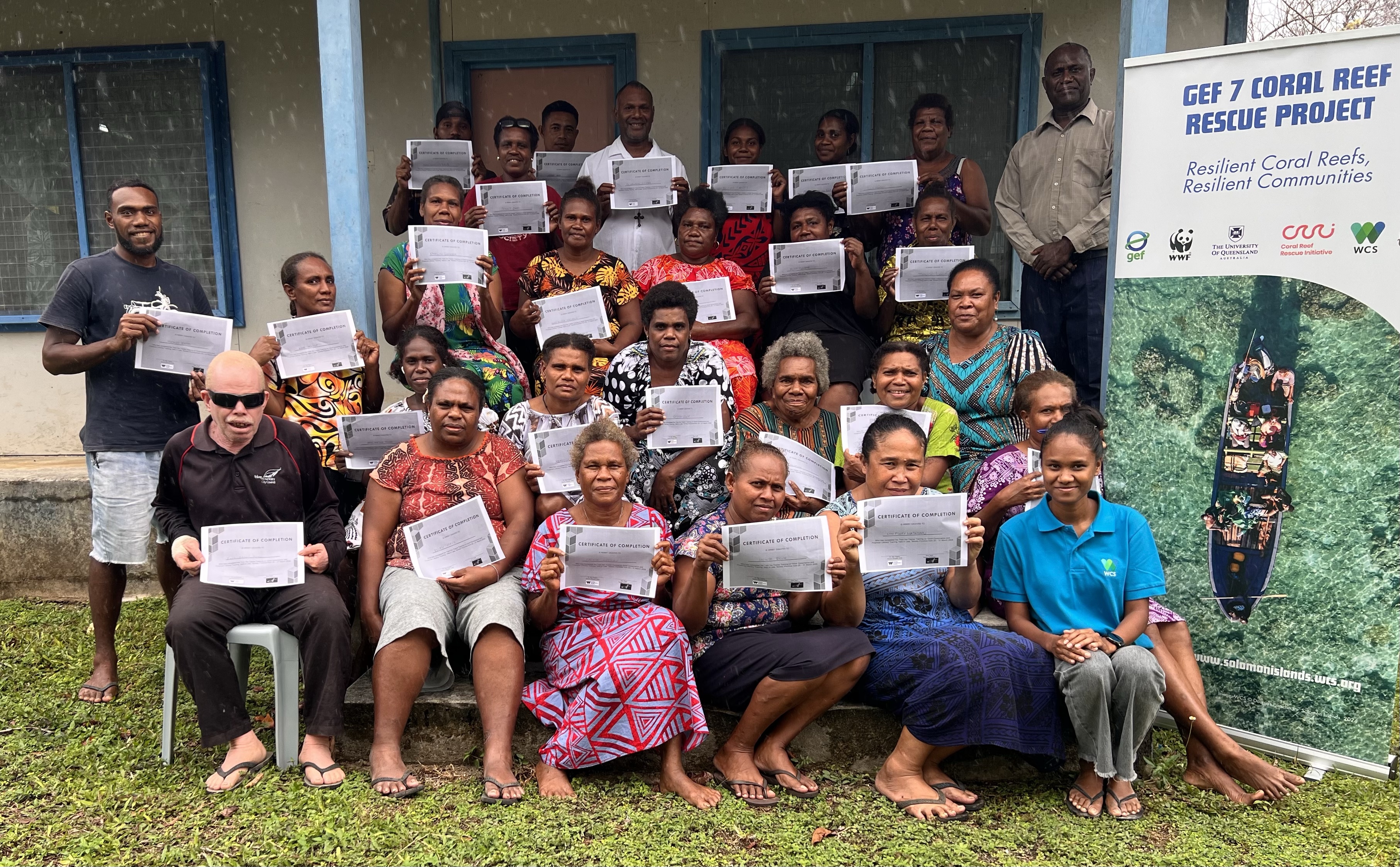
PC1: Participants posing with their certificates after the training.
Lata, Temotu Province, Solomon Islands – Community leaders across Temotu Province are better equipped to lead with transparency, accountability, and financial confidence following a week-long Training of Trainers (ToT) on Good Governance and Financial Literacy delivered by the Wildlife Conservation Society (WCS) in partnership with the Temotu Provincial Council of Women (TPCW).
Held from 22–26 June 2026, the training brought together savings club members, ward leaders, TPCW executives, and community representatives from communities surrounding Lata. The program was designed to strengthen participants’ capacity to effectively manage finances, resources, and leadership responsibilities, while preparing them to transfer these skills to others in their communities.
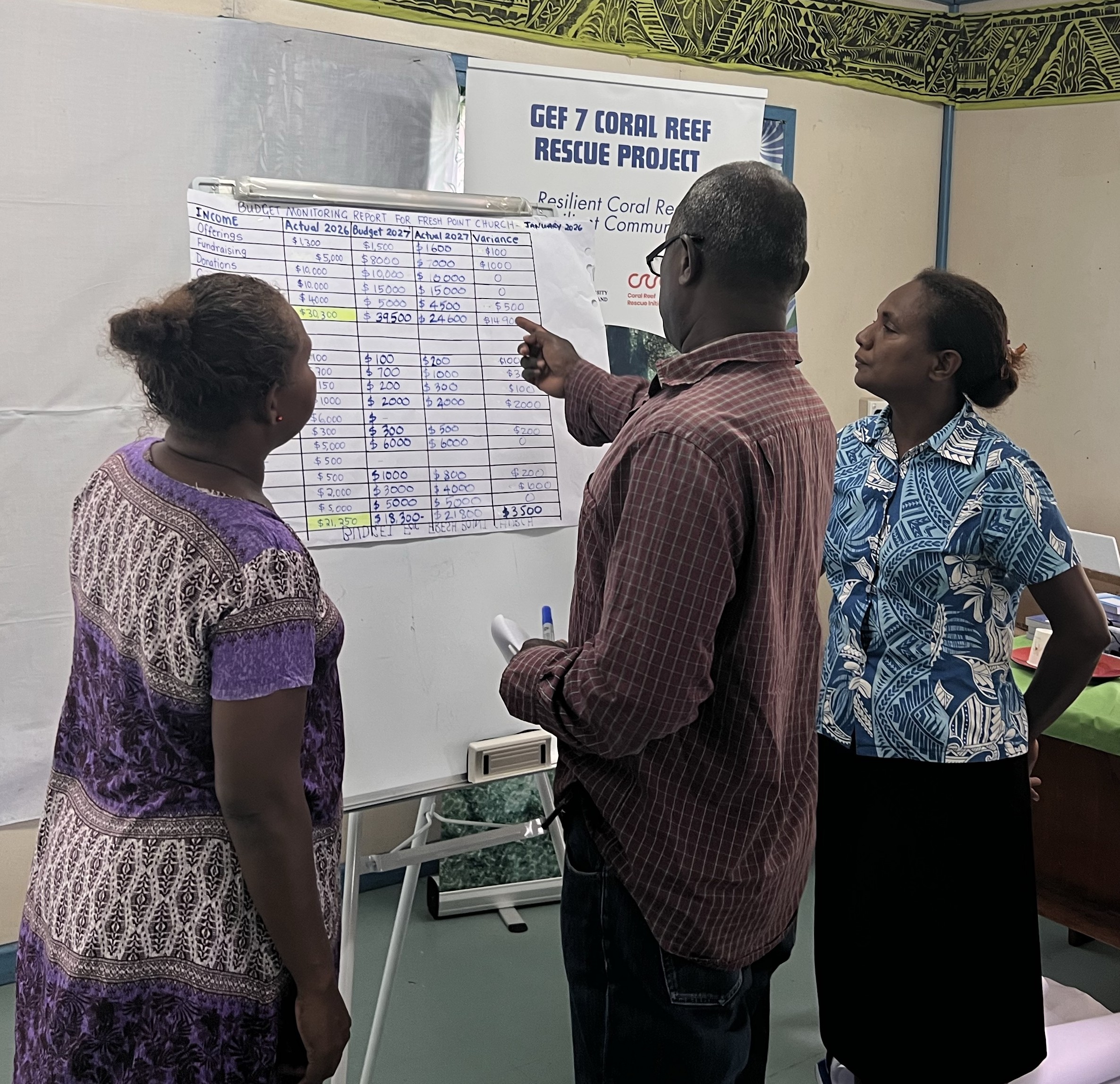
PC2: Training facilitator Mr. Tupiti explaining the budgeting table to the two participants.
Through practical exercises and interactive learning sessions, participants enhanced their understanding of budgeting, financial management, accountability, leadership, and good governance—critical skills for strengthening community institutions and supporting sustainable development. The training was supported through the Coral Reef Rescue (CRR) Project, funded by the Global Environment Facility (GEF-7).
Speaking on behalf of participants, Ms. Ellen Navi of Ward 7, Venga Community, highlighted the value of the training and its potential ripple effect across the province.
“This training has strengthened our understanding of financial management and how we can apply it within our communities, families, and churches. We are eager to share this knowledge with others and are grateful to the donors and partners who have invested in building the capacity of leaders in Temotu Province,” said Ms. Navi.
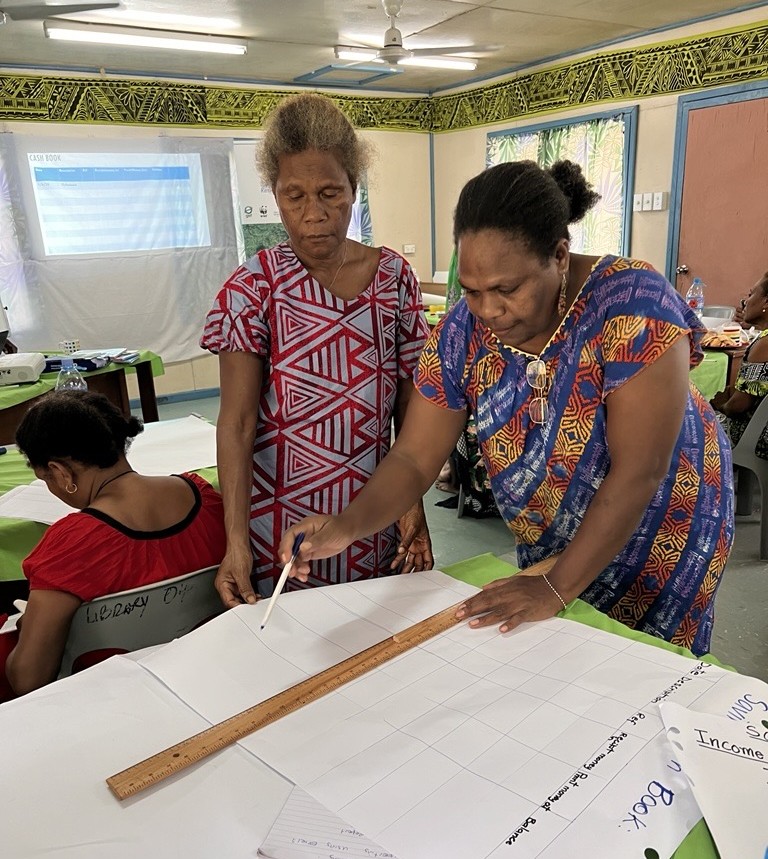
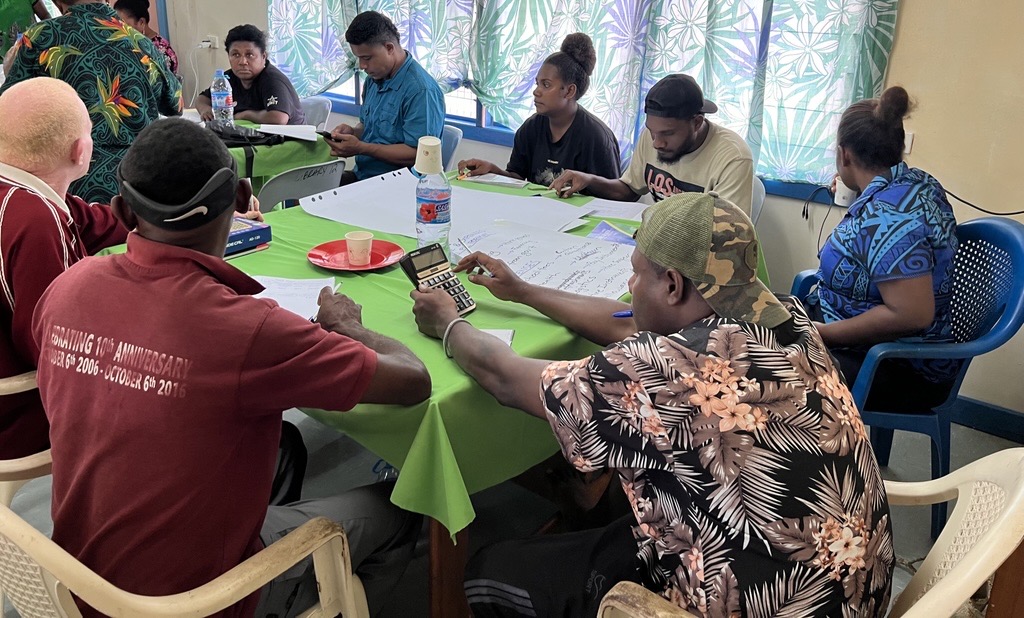
PC3 - left: Ellen Navi drawing a table for their group’s budgeting & PC4 - right: Youth group members participating in the group activity.
The ToT approach is expected to extend the reach of the training well beyond those who attended, enabling participants to pass on their knowledge and skills to fellow community members and local organisations.
Ms. Ellen Salopuka, Chairlady of the Area 4 Savings Club and Ward 8 representative, said the training would have direct benefits for women’s economic empowerment and community development initiatives.
“Our savings club has been operating with limited financial management knowledge, but this training provides the skills needed to improve how we manage savings and support women to meet important expenses such as school fees and household needs. As a ward leader, I also see this training as essential for Ward Development Committee members, helping us to budget effectively and allocate resources more strategically,” she said.
The training reinforced the importance of financial literacy in building resilient communities. Strong financial management practices can help savings groups expand livelihood opportunities, strengthen household economic security, and reduce reliance on natural resources by supporting alternative income-generating activities.
TPCW President Ms. Edith Dagi said the training offered an opportunity for participants to reflect on and improve existing governance and financial systems.
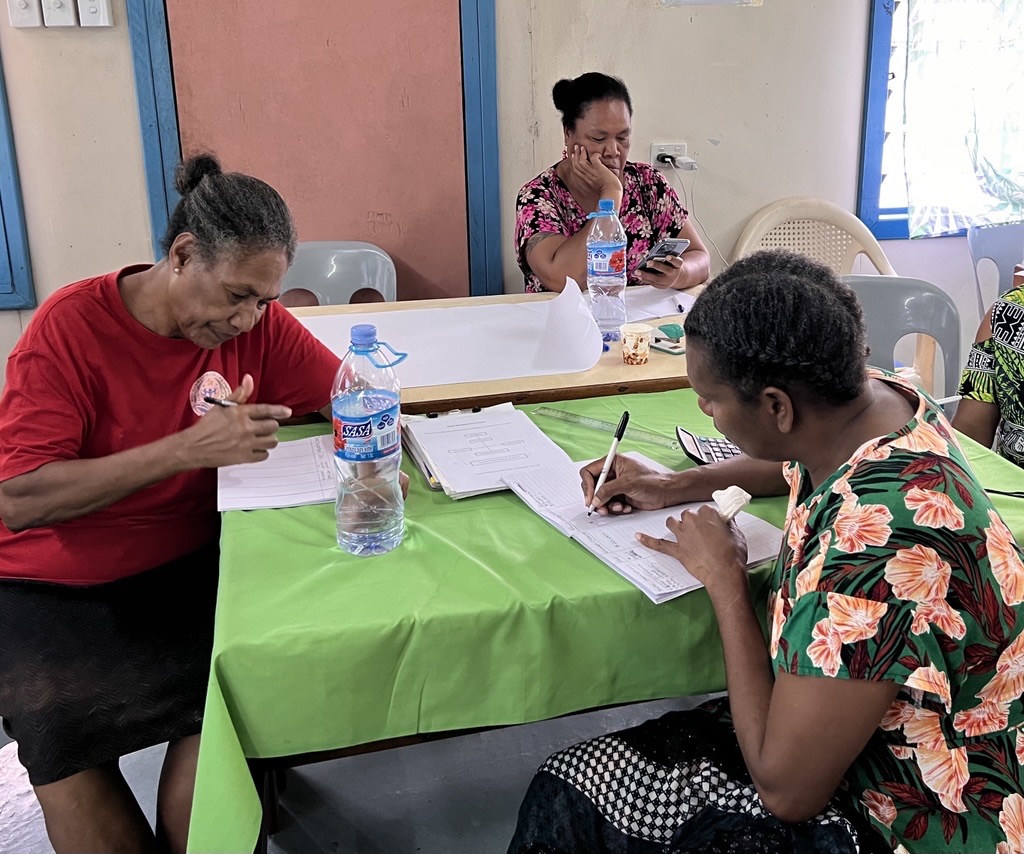
PC5: Ms. Dagi (in red shirt) participating in group activity with other TPCW executive members.
“While these concepts are not entirely new, this training helped us identify weaknesses within our current financial systems and governance structures. It has provided practical ways to improve transparency, coordination, and accountability in how we operate,” said Ms. Dagi.
The program highlighted the importance of good governance and financial literacy at all levels—from savings clubs and community organisations to ward committees and provincial institutions. Effective governance systems and sound financial management are fundamental to informed decision-making, equitable benefit-sharing, accountability, and the long-term sustainability of community development and natural resource management initiatives.
Participants who completed the training are now expected to cascade their knowledge throughout Temotu Province, contributing to stronger institutions, improved livelihoods, and more resilient communities.
About the Coral Reef Rescue Project
The training was supported through the Coral Reef Rescue (CRR) Project, , funded by the Global Environment Facility (GEF-7). The project is a government-led initiative implemented through the Ministry of Environment, Climate Change, Disaster Management and Meteorology (MECDM) and the Ministry of Fisheries and Marine Resources (MFMR). Key project partners include the World Wide Fund for Nature (WWF-US), the University of Queensland (UQ) as the Lead Executing Agency, and the Wildlife Conservation Society (WCS) as the National Technical Facilitator and in-country lead in Solomon Islands.
Free Online Resources for Coral Reef Conservation
Complementing the work in each country, the GEF 7 CRR project has released free online courses on coral reefs. These include Coral Reefs: Introduction to Challenges and Solutions, Coral Reefs: Sustainable Blue Economy, Coral Reefs: Data and Monitoring, Coral Reefs: Climate Resilient Communities. Courses are available in English, Bahasa Indonesian, and French.
Alongside these courses, a new online decision support tool was created: Coral Reef Rescue Portal. This brings together over 70 existing coral reef datasets and resources in one easy-to-use, searchable platform.