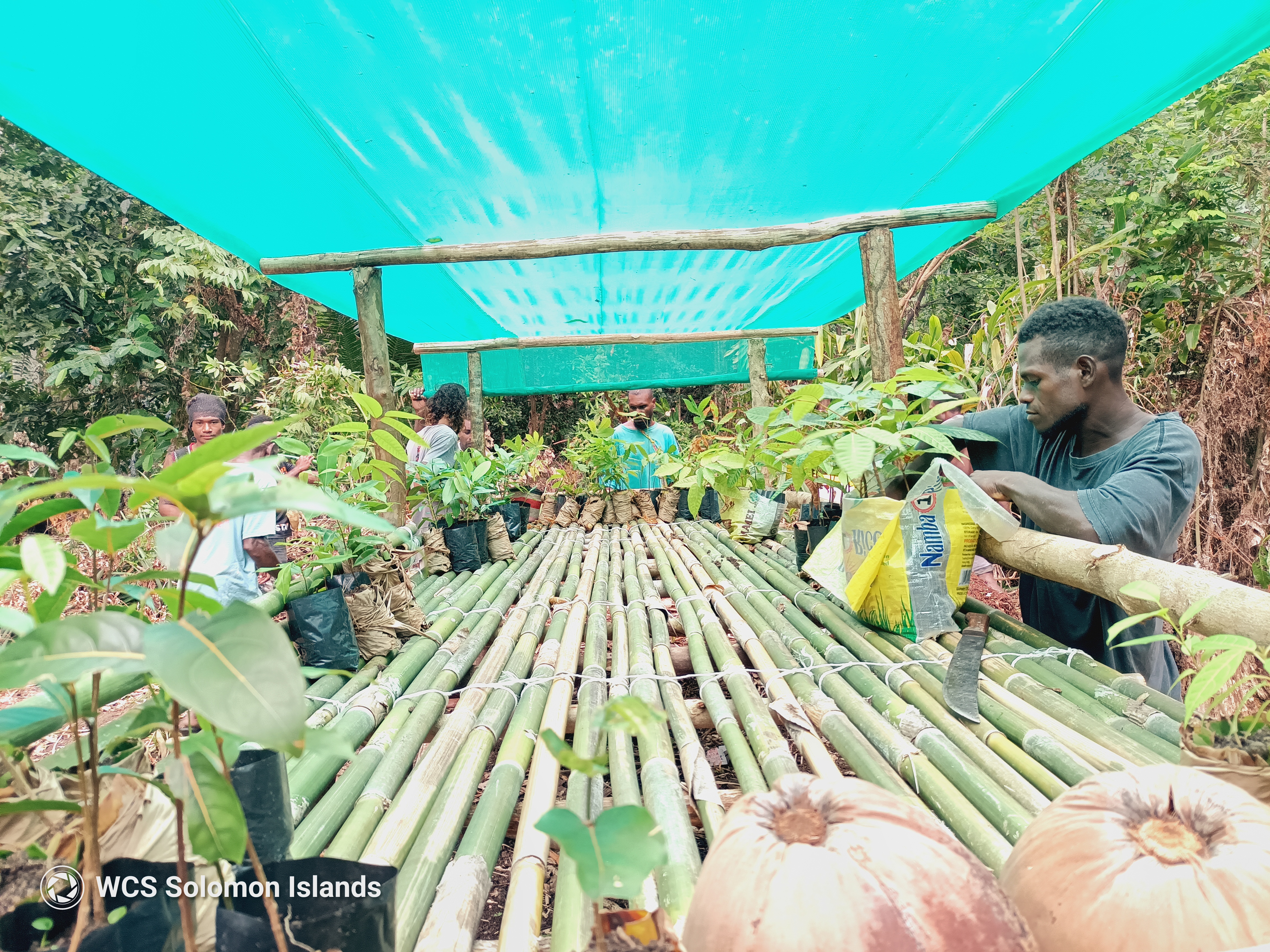
PC: Youths from Toa community preparing to move the seedlings from the nursery shed to watershed areas for replanting and environmental restoration.
Wildlife Conservation Society Solomon Islands’ (WCS SI) BioScape team together with officers from the Ministry of Forestry and Research and partner communities in the Ngella Islands, have successfully completed a major Nature-based Solutions (NbS) intervention across four partner communities: Toa, Gumu, Soka, and Haleta.
The final phase of the intervention, carried out from 1 to 11 September, involved the planting of native tree species within degraded watershed areas and along stream banks. This milestone marks the completion of the NbS activities implemented within the four communities.
The intervention began earlier in August, from 10 to 17 August 2026, when the WCS SI BioScape team, Central Provincial Forestry Officers, and community members established plant nurseries using native seedlings collected from the wild. Over the following three weeks, the seedlings were nurtured in community nurseries before being transplanted into degraded watershed areas and riparian zones.
Across the four partner communities, a total of 412 native tree seedlings were planted within watershed areas, while an additional 71 mangrove seedlings were planted along the coastline of Soka Community. In total, the project supported the regeneration of approximately 2.3 hectares of riparian habitat along rivers and stream banks.
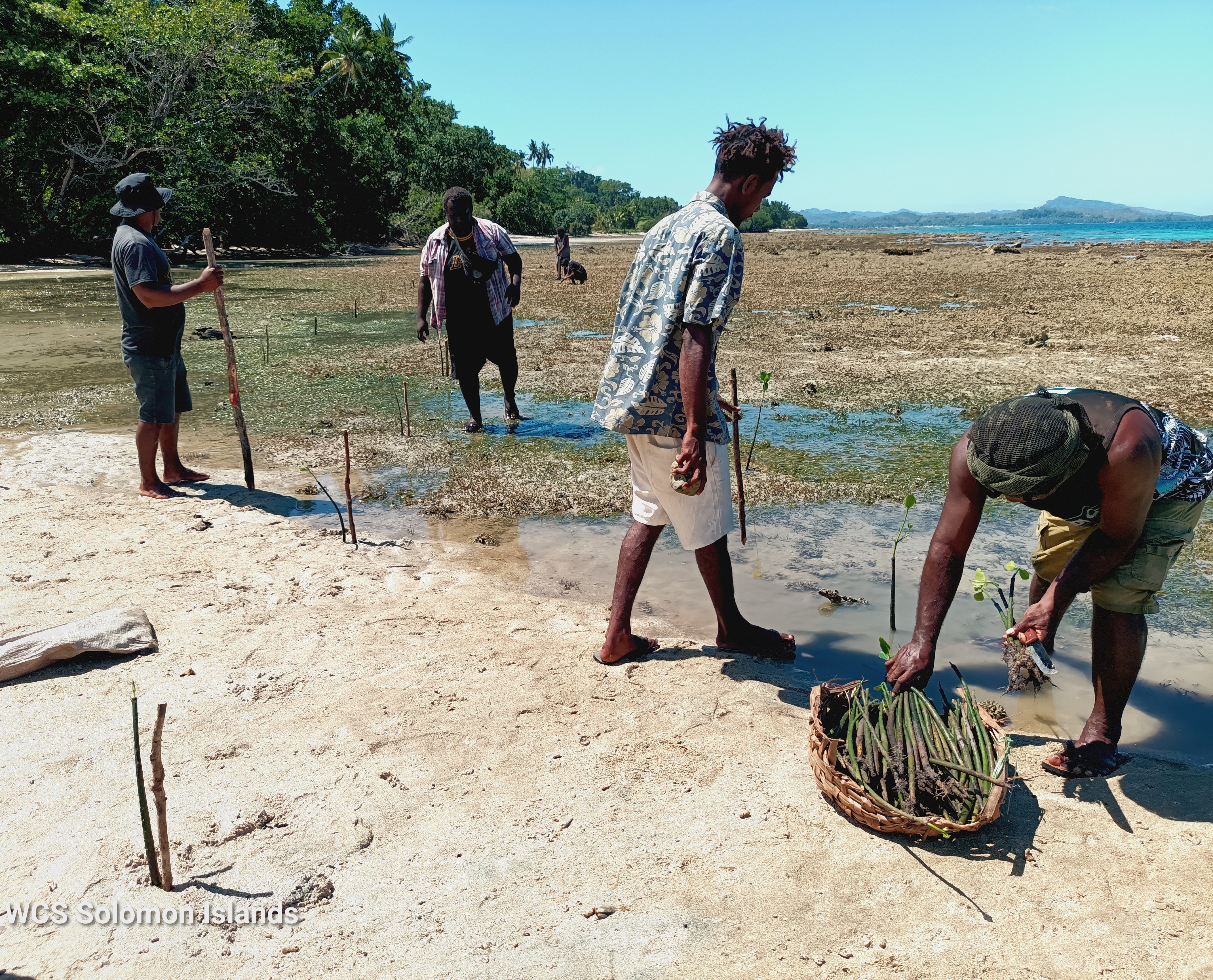
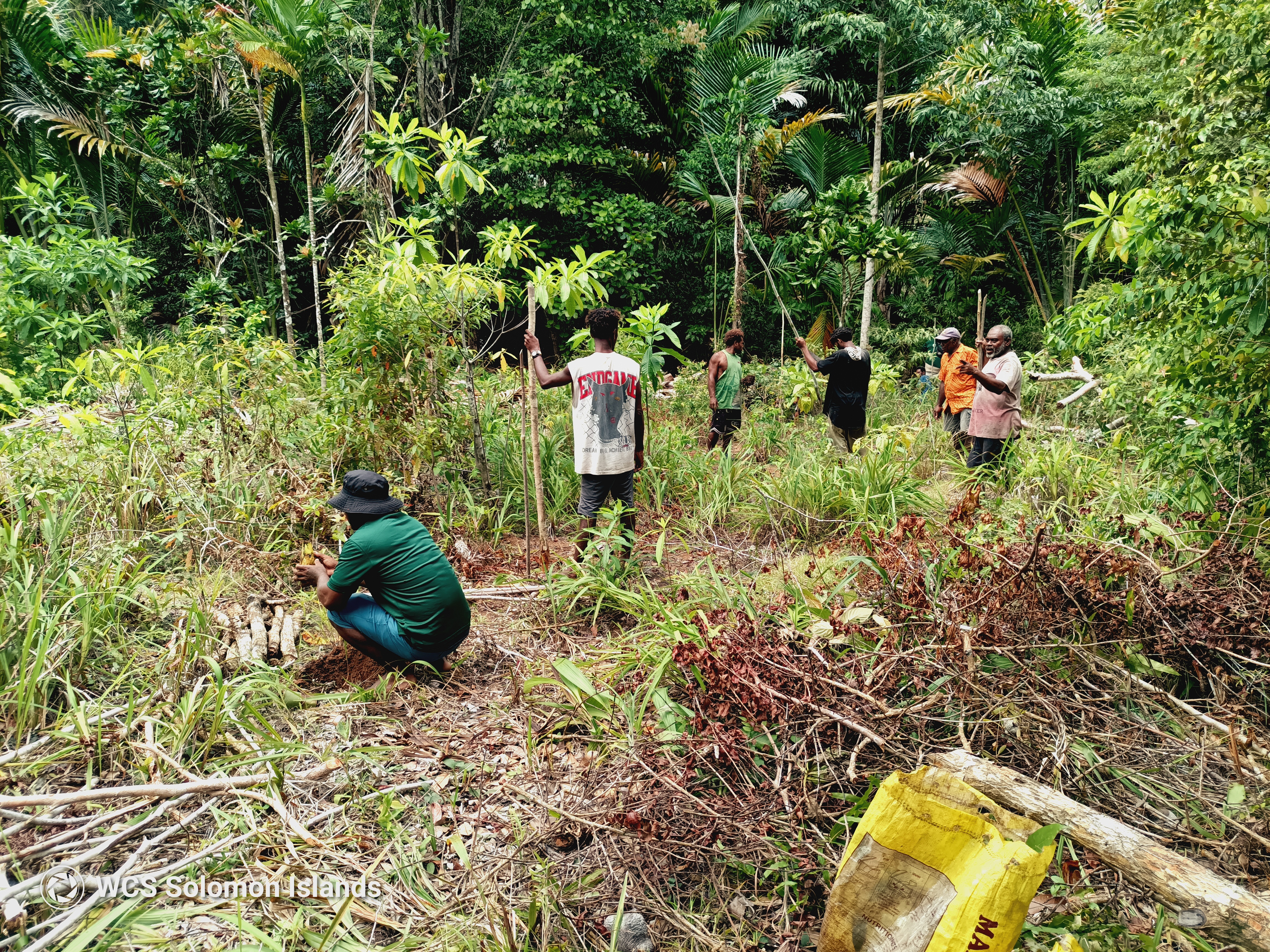
Pic from left - right: Community members from Soka actively plant mangrove seedlings along their shoreline as part of local environmental conservation and coastal resilience efforts & community elders and youth actively participate in the NbS intervention activities in Soka.
The restoration effort aims to revive biodiversity, strengthen ecosystem health, and create protective buffer zones around critical water sources. By restoring vegetation along watersheds and waterways, communities can reduce the impacts of climate change-related threats such as soil erosion, increased water turbidity, landslides, and the drying of water sources during extended dry periods. Healthy forest cover within catchment areas also helps cool the landscape, safeguard water quality, and build long-term community resilience.
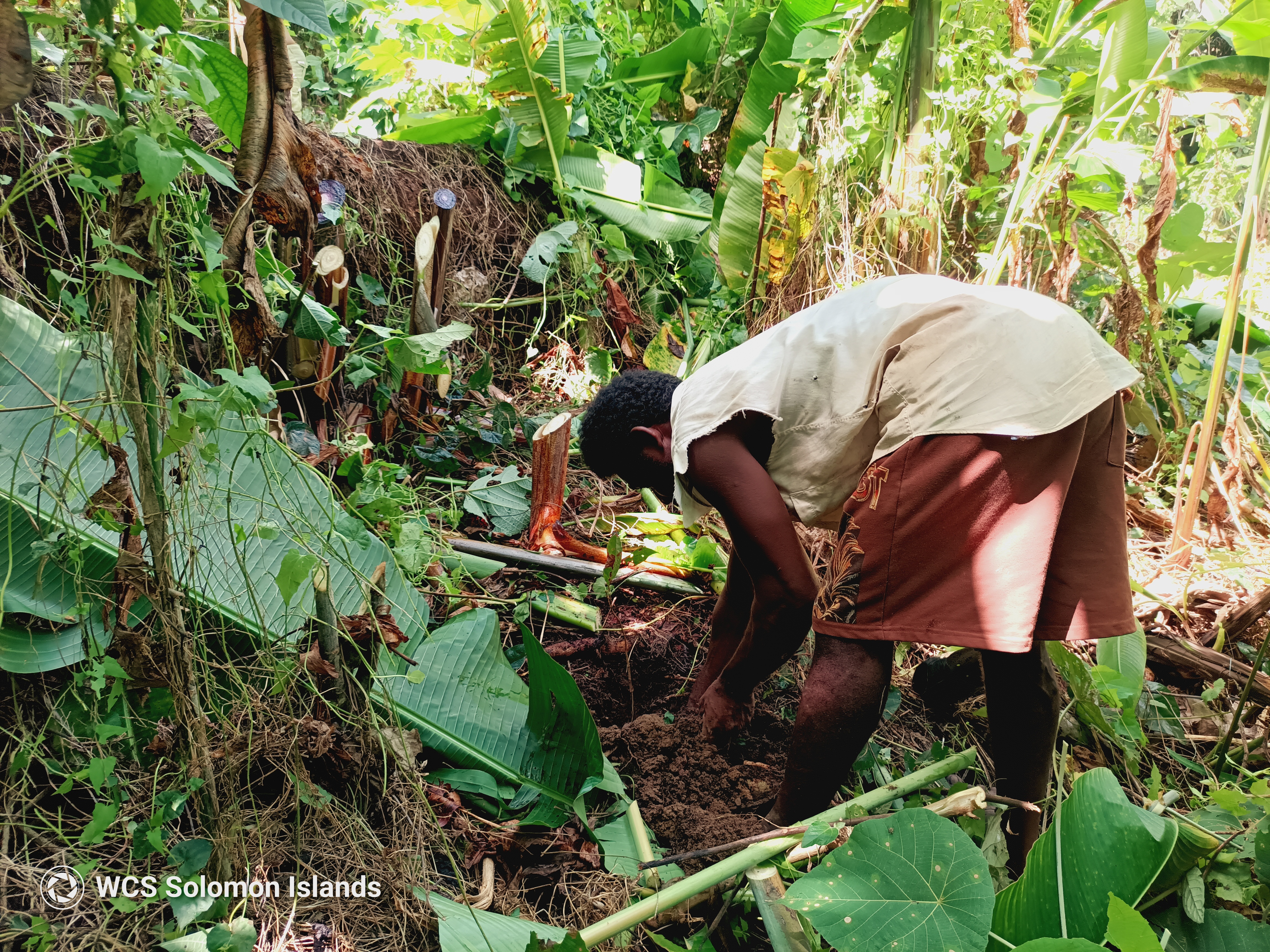
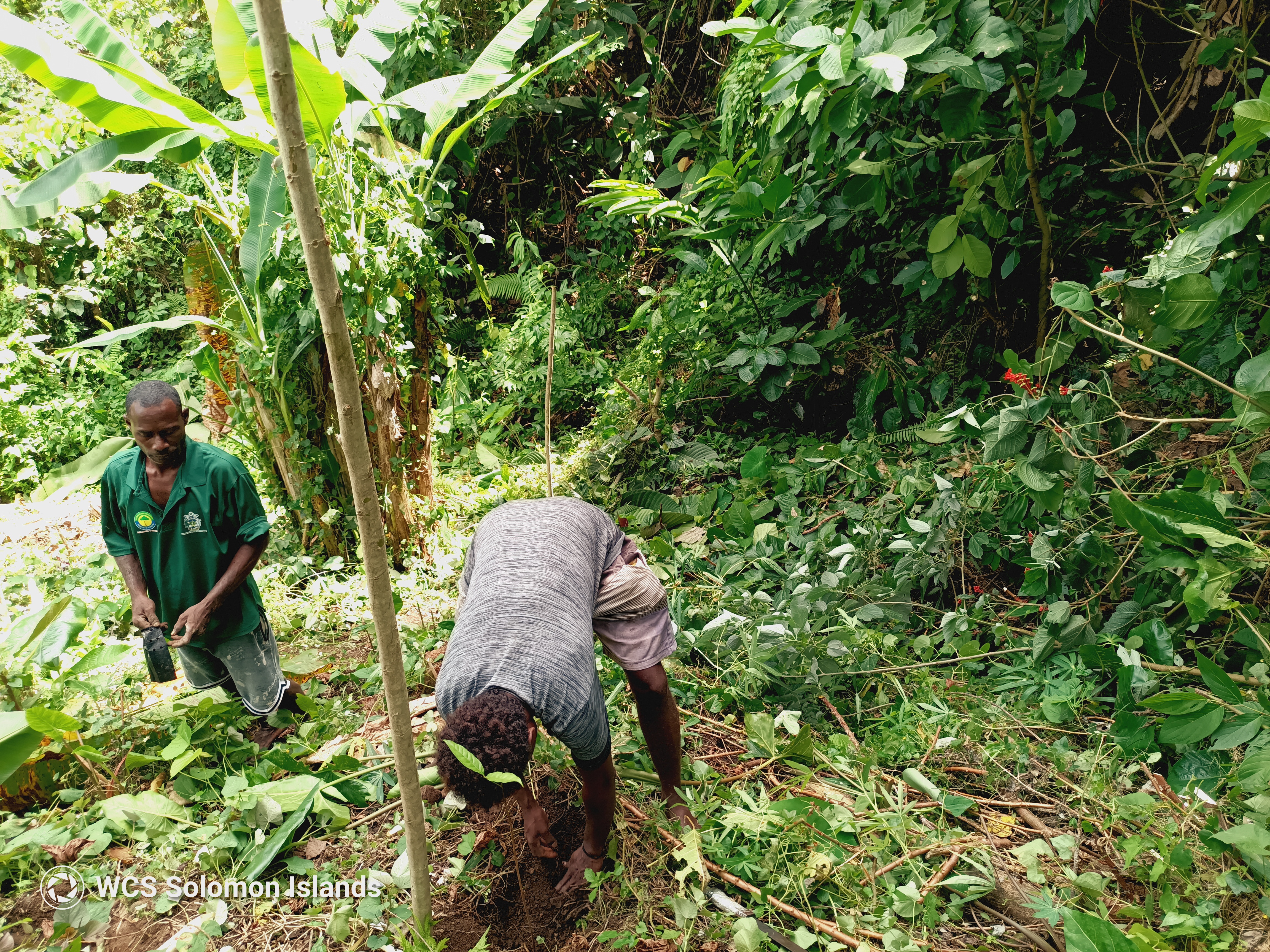
PC from left - right: A community member from Gumu carrying out replanting activities around the watershed area as part of the Nature-based Solutions (NbS) initiative implemented in Gumu & A community member in Haleta carries out tree planting activities with assistance from the Central Islands Provincial Forestry Extension Officer.
The activity received strong participation from men, women, youth, and children across all partner communities. This high level of engagement demonstrates strong community ownership of the project and a shared commitment to protecting and restoring local ecosystems.
Community leaders acknowledged the importance of the intervention and urged residents to remain actively involved in monitoring and maintaining the newly planted seedlings. Continued stewardship will be essential to ensure the seedlings survive and thrive in their natural environment.
As the NbS intervention reaches completion in the Ngella Islands, the BioScape team extends its sincere appreciation to the Central Provincial Forestry Officers for their technical expertise, dedication, and support throughout the implementation of the project. The team also acknowledges the partner communities of Toa, Gumu, Soka, and Haleta for their commitment, participation, and ownership of the project activities.
The team further expresses its gratitude to the European Union-funded Pacific BioScape Programme and the Secretariat of the Pacific Regional Environment Programme (SPREP) for their continued support in advancing biodiversity conservation, ecosystem restoration, and climate resilience efforts in Central Province.